Best Sci-Fi Novels of the 21st Century
Science-fiction novels published since 2000, ranked by a blend of major awards (Hugo, Nebula, Clarke), critical acclaim and lasting influence. Ordering is inherently subjective, but every book here is a widely recognized modern landmark of the genre.
The podium
— top 3 by community votes
Blindsight — Peter Watts
A cult-classic hard-SF first-contact novel that interrogates consciousness itself — asking whether intelligence even requires it. Bleak, dense and rigorously scientific, it's a favorite of readers who want to be challenged.
Annihilation — Jeff VanderMeer
The opening of the Southern Reach trilogy: an expedition into the eerie, transforming Area X. A defining work of 'New Weird' fiction, atmospheric and unsettling, later adapted into Alex Garland's film.

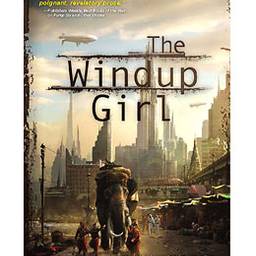
The Windup Girl — Paolo Bacigalupi
Hugo and Nebula co-winner set in a future Bangkok of biotech plagues, calorie economies and gene-hacked politics. One of the sharpest biopunk visions of climate-and-corporate collapse.
The Three-Body Problem — Liu Cixin
The 2015 Hugo winner and the book that broke Chinese SF into the global mainstream. A first-contact epic that swings from Cultural Revolution history to hard-physics cosmic threat, launching the Remembrance of Earth's Past trilogy.

Ancillary Justice — Ann Leckie
Swept the Hugo, Nebula and Arthur C. Clarke Awards — a rare triple crown. Narrated by an AI that once inhabited a warship and many bodies at once, it's a landmark of modern space opera and its handling of identity and gender.

A Memory Called Empire — Arkady Martine
A 2020 Hugo winner blending political thriller, murder mystery and questions of memory and cultural assimilation, set in a seductive galactic empire. Praised for making high-stakes court intrigue thrilling.

Children of Time — Adrian Tchaikovsky
A Clarke Award winner spanning millennia as an uplifted species evolves on a terraformed world while the last humans drift toward it. A modern classic of grand-scale, big-idea evolutionary SF.

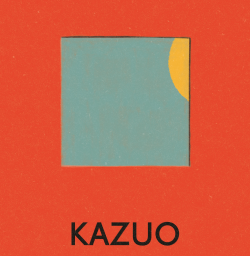
Klara and the Sun — Kazuo Ishiguro
The first novel after Ishiguro's Nobel Prize: a tender, quietly devastating story told by an 'Artificial Friend' robot observing human love and mortality. Literary SF at its most humane.

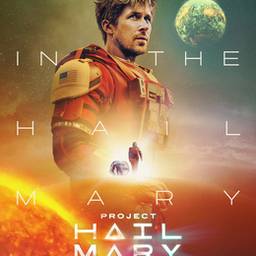
Project Hail Mary — Andy Weir
From the author of The Martian: a lone astronaut wakes with amnesia on a desperate mission to save the Sun, and the friendship at its core became a word-of-mouth phenomenon. The most purely fun, accessible book on this list.

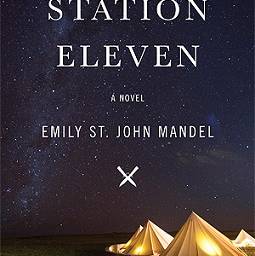
Station Eleven — Emily St. John Mandel
A literary post-pandemic novel following a Shakespeare troupe across a collapsed world, threaded together by memory and art. Crossed over to mainstream acclaim and a hit HBO adaptation.